


News
Festival Blog
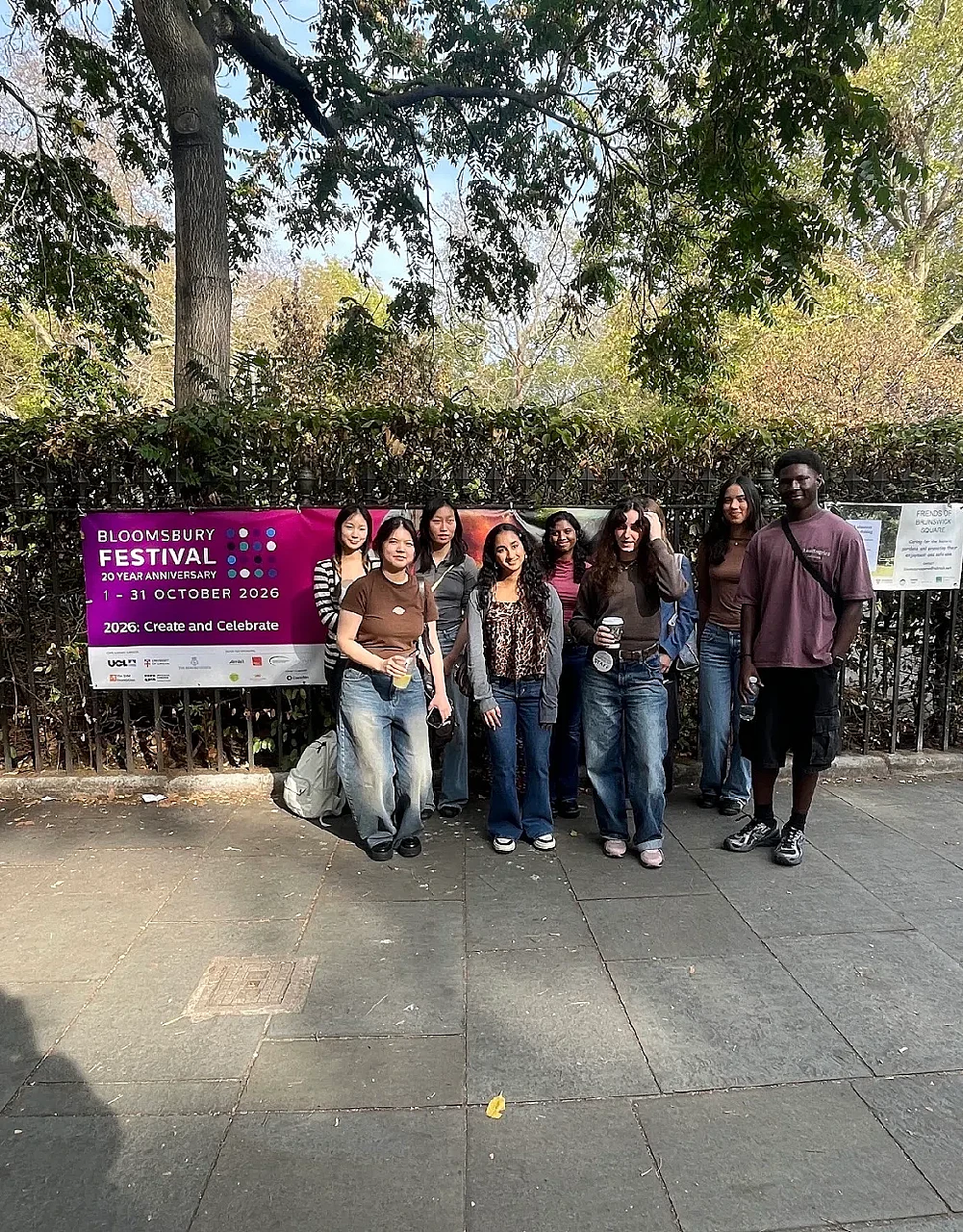
Royal Central School of Speech and Drama student Pia Marr reflects on Festival events.
Read moreBloomsbury Festival's 20th Anniversary: 1 - 31 October
DonateA creative explosion of arts, culture and science


“As I turned over the last page, after many nights, a wave of sorrow enveloped me. Where had they all gone, these people who had seemed so real?”
– Louise Glück, ‘A Work of Fiction’, 2014
No matter how real, the moment anyone’s out of the room, let alone set free from this plane of existence, they become a story. Sometimes, they leave other remnants: children, buildings, blue plaques, literature, laws, greater freedoms, discoveries, inventions. But the remnants need explaining; they’re nothing without the story of the person behind them (except for the kids, of course).
In every corner of Bloomsbury there’s a story and a person waiting to be resurrected, their lives intersecting with society in ways that illuminate the past, and provide foundations for our present.
On the day after Nobel Prize-winning US poet Louise Glück dies (one of only 16 women to win that award), I learn about several notable and rule-breaking women who lived in Bloomsbury over the last few centuries, as I joined the Rebels & Bluestockings tour. To give you a sense of the 90-minute walk, I lost count of the number of times our (female) tour guide ended another story of a pioneering or progressive woman with: “and she never married.”
The phrase became a running joke, until it wasn’t. Oonagh, our guide, recounted a poignant tale about her own mother, whose teaching career was interrupted by marriage. At least she was able to re-enter the classroom when her own children were old enough to be in school themselves – that’s how far we had progressed by the late 20th century. Marriage has historically been, for women, a permanent retirement from the world of work.
This is a tour about the New Woman: “Free-spirited and independent, educated and uninterested in marriage and children… threatened conventional ideas about ideal Victorian womanhood,” according to Greg Buzwell, Curator of Contemporary Literary Archives at the British Library. The New Woman is the flapper of their time, the opposite of those poor, forgotten good girls conjured up by the first half of the phrase: “Well-behaved women seldom make history.”
This 1976 quote, from Pulitzer Prize-winning American historian Laurel Thatcher Ulrich, is about how the domestic work of “good” women, who did what was expected of them and got married, has been erased from history. The phrase has taken on a life of its own. It’s often depicted in flattering neon lights above the entrance to the women’s toilets in bars, to make the perfect background for an Instagram story.
There aren’t many statues on our route for these groundbreaking, troublesome New Women. Instead, we spy a few notable blue plaques to zoom in on as we snap away on our phones: poet Christina Rossetti, politician and activist Dame Millicent Fawcett, the first British female dentist Lillian Lyndsay. We’re not even talking about Virginia Woolf on this tour. She gets enough of the spotlight.
It’s a day of contrasting halves for me. In the evening, I head to 49 Great Ormond Street to see ‘If Walls Could Sing’ by The Good Companions. This address is the oldest residential house in Bloomsbury. Built in 1686, as an elegant family residence, it became down-at-heel lodgings, then offices, a coffee shop and museum, before current owner Alec Forshaw bought it at auction in the early 1990s.
In this front room, we meet historical characters brought to life again by the performers. Although the names of the owners before the 1800s are lost to time, the records from then on were kept fairly well. After the trailblazing women of this morning’s tour, we meet more everyday characters, people whose names and deeds can still be found in legal documents and apocryphal tales. Turns out, what will survive of us is love and evidence of a neighbour dispute over a fence and that old Bebo.com account, unless we become extraordinary.
In the interval, we climb upstairs to see the original wooden doors from the front room, and to hear the owner Alec talk about how rundown the house was when he became the owner. I buy one of his books, 1980s London: Portrait Of A Decade Of Change, featuring photos by Theo Bergström. A woman next to me comments that she lived through that time; and now, how long ago it was. Yes, I agree. I was born in 1980s London. In the book’s black-and-white photography, it looks like history. It is history.
I have to leave before the end of the show because I’m on deadline to write this piece that you’re reading now. From a Google Doc on my phone to a web browser on yours, I’m communicating to you across time and space, and your mind does something magical with these symbols to understand me. Somehow you’re making sense of the jumbled thoughts and feelings I had today (thank you), catapulted into the past in the city I’ve always lived in, a home chosen by my parents years before I was born.
On the Rebels & Bluestockings walk, our resident traffic-stopper in a neon vest (I’m sorry I didn’t get her name) points out the BT Tower, and remarks that Coldplay refer to it in their song ‘Fix You’, a track Chris Martin wrote for his then-wife Gwyneth Paltrow, to help her grieve for her father. The band had studied at UCL in Bloomsbury in the 90s, and the light of the 1960s-era BT Tower had often guided them home after drunken nights out. I laughed – a decade after them, it served that purpose for me and my friends too.
We called it The Eye of Sauron, because we never wanted to go home, to bed. We never wanted the night to end. Bloomsbury was ours for that tiny moment in time; long gone now. We had seemed so real back then, but really we were just earlier versions of ourselves, in the process of being gentrified.
By Suchandrika Chakrabarti
Photo taken by Suchandrika Chakrabarti at If Walls Could Sing at The Music Room.
Continue reading
Royal Central School of Speech and Drama student Pia Marr reflects on Festival events.
Read more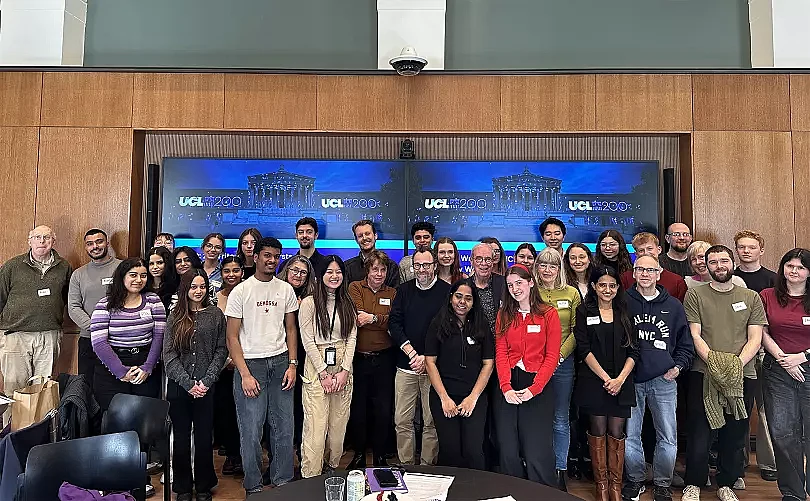
26 Firsts brings together a collection of original pieces that showcase student voices, creativity and perspectives through an exploration of UCL's past.
Read more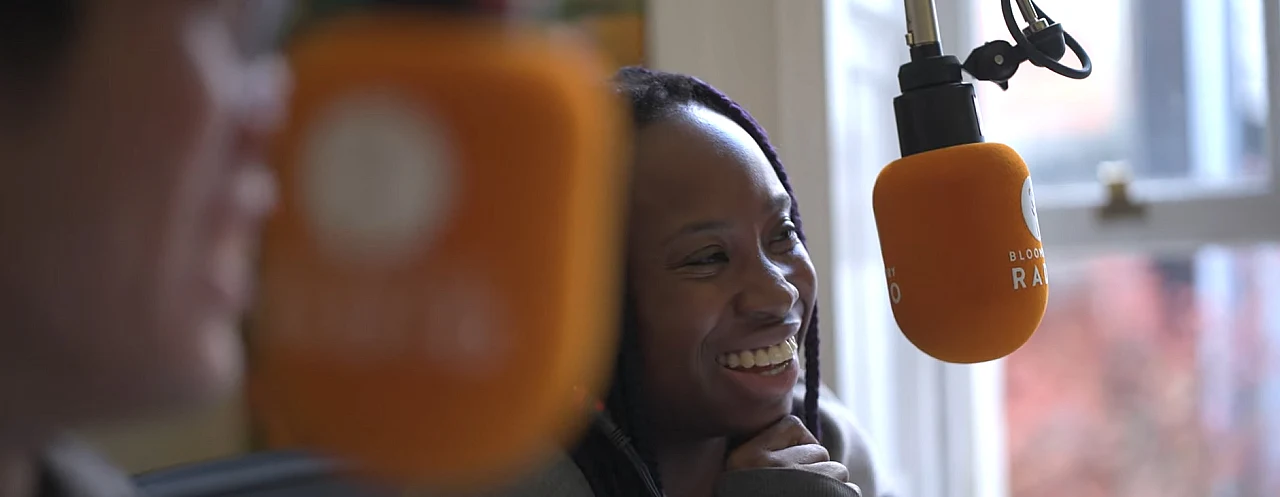
Broadcasting throughout the Festival from 3pm daily - check out this week's Bloomsbury Radio schedule here.
Read moreWe use essential cookies to make this site work. With your permission we would also use analytics cookies to count which pages people visit, so we can improve the site. Read our Privacy Policy.
These cookies allow us to measure traffic and analyse your use of the website. This helps us improve the way the site works.
These cookies are necessary for the website to function and cannot be switched off. They are usually only set in response to actions made by you which amount to a request for services.