


News
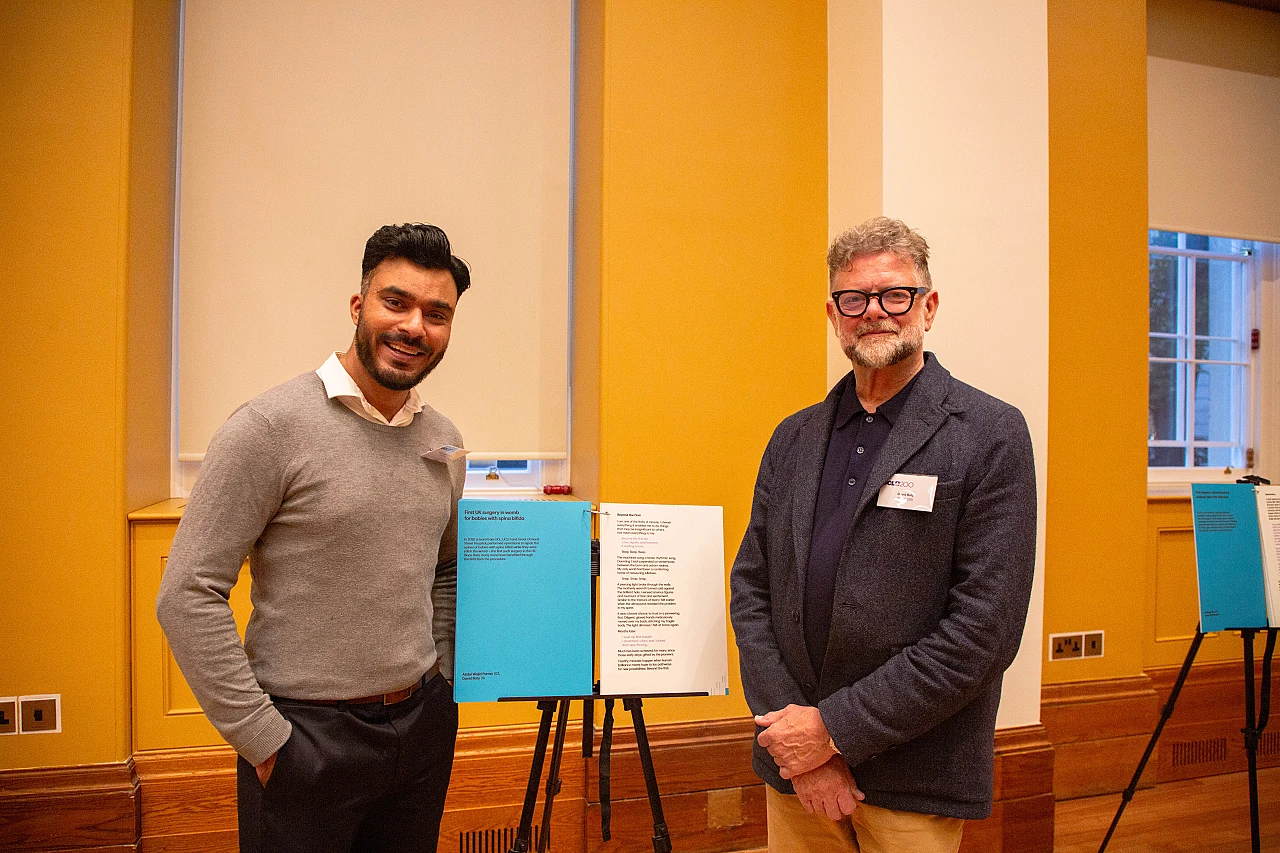
Writing from the womb for UCL’s Bicentenary
UCL Student Abdul Wajid Parray writes about his experience taking part in this collaborative project with 26 Writers
Read moreBloomsbury Festival's 20th Anniversary: 1 - 31 October
DonateA creative explosion of arts, culture and science


Vivien Ellis and volunteer researchers examine the books of ballads relating to St Giles-in-the-Fields at the British Library.
Jessica Wall is a Ballads and Song Research Volunteer taking part in the Strange Doings in London project run by Bloomsbury Festival and supported by the National Lottery Heritage Fund.
The final research visit of Strange Doings in London took the group to the prestige setting of the British Library. Hosted by Dr Rupert Ridgewell, Lead Curator of Printed Music, the group was ushered through the library’s vast, ever busy atrium, across its roof terrace and into a special room. Two presentations on the archives relevant to us had been prepared and the tables around the room held specially selected books, nestled cosily on little cushions ready for any bibliophile’s perusal. These weren’t just books, these were British Library books.
 It felt like a special privilege that these fantastic materials had been prepared for us and was more than I had been expecting. The first presentation was by Michele Banal, Lead Curator, World and Traditional Music, “Folk Song and Music Recordings in the British Library Sound Archive.” The archive holds a mind boggling amount of recordings, over seven million, of speech, music, wildlife and the environment, dating from the 1880s until the present day. These are carried on wax cylinders; shellac, lacquer and vinyl discs; open reel and compact cassettes; compact discs; and digitally. The collection has been donated by scholars, musicologists and anthropologists. Mr Banal explained that there were little to no recordings from London, as folk music archivists tended to travel out from the city around the country when collecting their recordings. This spoke somewhat to the ephemeral lives played out on the city’s ancient streets; London is a city of flux, always changing and maybe something ungraspable at its heart.

Though London voices were few, we heard some transporting recordings. They were recorded in the 1950s but the singers were old so they were a gateway to older times still. There was Bill Westaway, recorded in Devon, singing the tale of a very mean woman, Barbara Allen, who brutally turned down a man’s proposal and when the lovelorn’s luck didn’t improve and he died, she appeared at his funeral to raucously cackle, scandalising the community. We also heard a street seller calling to advertise his Turkey Rhubarb, “I come here from Turkey to make you all well”, and Belle Stewart, who came from a long lineage of Scottish travellers, singing The Berryfields of Blair – a vivid vignette of people congregating to pick berries. The song ends on a moving flourish: “And while I’ve breath to spare/I’ll bless the hand that let me tae/the berry fields o Blair.” These were haunting flares sent through time, immediate but also far away in time and culture.
We learned that in a dramatic turn of recent events, worthy of a modern ballad, all these treasures were threatened by an unknown malevolence. A heist in 2023 saw cyber attackers infiltrating the British Library’s systems and making off with personal details. To cover their tracks they threw a digital grenade behind them which badly effected the sound archive. The sound archive has now re-opened to the public, but work is still ongoing to fully restore its services to the public. The digital highwaymen even demanded a ransom, which the library was not allowed to pay due to its publicly funded status. Thanks to the tireless work of Mr Banal, Dr Ridgewell and their colleagues, knowledge prevails.
The second presentation concentrated on printed music at the library, a collection of around 1.6 million items from 1501 to the present day, including sheet music and para-textual information. Dr Ridgewell had picked out some especially interesting items to show us: the impenetrable Harmonic Diagram invented by C. Wheatstone which remains a mystery to everyone but the creator himself to this day; experiments in music notation; rare or unique sheet music in the collection; and the jaunty and very British song Monday was the Day (Ev’ry Pub We Saw We Went Inside It).

There followed time for the group to look over the items that had been selected for us. The large books were treated with reverence and there was some disbelief in the group that we could handle them. Amongst the pages, I was taken with the enchanting Woodlark Rondo, a piece where the musician had notated the bird’s song with an etching of the artist themselves above it. We got to handle a wax cylinder dating from 1908, marvelling at the physical grooves that become sound waves.
To finish the session, Vivien sang, bringing the ballad from its page bound slumber into the air surrounding us. It was a wonderful experience and a fitting end to an enchanting project.
Read more about this project here.

Continue reading
UCL Student Abdul Wajid Parray writes about his experience taking part in this collaborative project with 26 Writers
Read more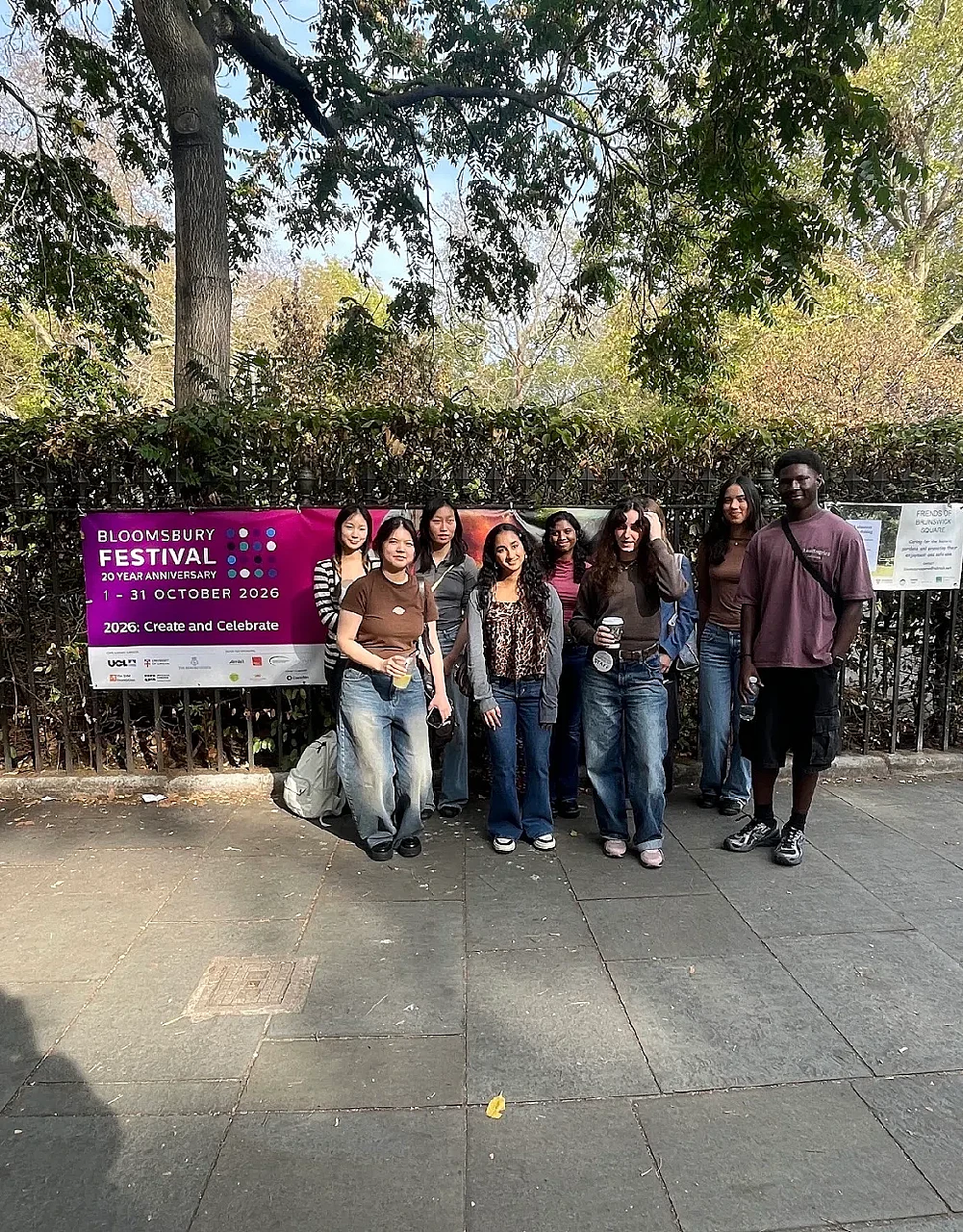
Royal Central School of Speech and Drama student Pia Marr reflects on Festival events.
Read more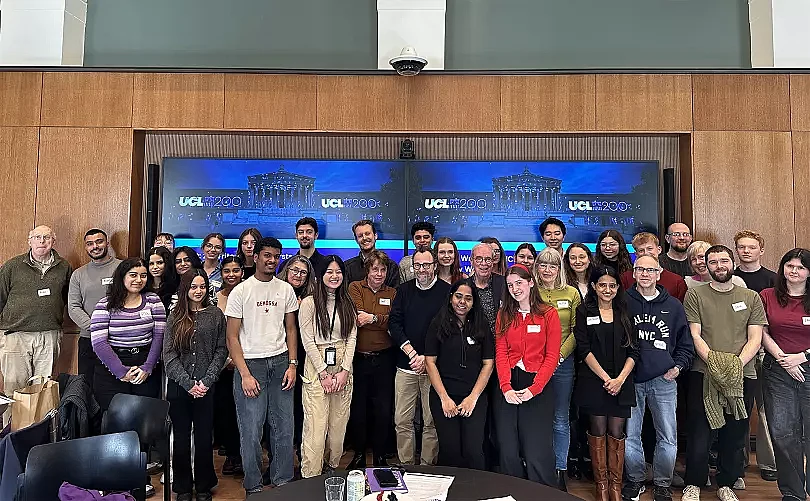
26 Firsts brings together a collection of original pieces that showcase student voices, creativity and perspectives through an exploration of UCL's past.
Read moreWe use essential cookies to make this site work. With your permission we would also use analytics cookies to count which pages people visit, so we can improve the site. Read our Privacy Policy.
These cookies allow us to measure traffic and analyse your use of the website. This helps us improve the way the site works.
These cookies are necessary for the website to function and cannot be switched off. They are usually only set in response to actions made by you which amount to a request for services.